


Face-to-face and online language learning. Which is better?

Facebook Twitter LinkedIn WhatsApp Pinterest Telegram Article Index Language teaching has undergone a significant change with the introduction of online methods. As the demand for flexible learning grows, it becomes necessary to compare face-to-face and online learning modalities. This article examines the key differences between the two, as well as their advantages and disadvantages. Factors such as communication, content personalization, and students' learning preferences will be addressed. Key Differences Between Face-to-Face and Online Learning Comparing face-to-face and online learning methods highlights fundamental aspects that can influence the choice of each modality. Each approach has particularities that make it unique in the language teaching process. Comparing Teaching Methods Face-to-face teaching is characterized by direct interaction between the teacher and students, which facilitates immediate error correction and active language practice. In contrast, online learning allows for a variety of resources and formats, providing versatility, but may lack the immediacy of face-to-face interaction. Adapting Content in Each Modality Content is adapted in different ways depending on the course format. In face-to-face learning, classes are typically designed to encourage active student participation, fostering the practical use of the language in a real-world context. On the other hand, online learning employs multimedia resources and interactive platforms that can enrich the learning experience, although there is a risk that some students may feel less engaged. Flexibility in Online Learning One of the main advantages of online language learning is the flexibility it offers. Students can access materials anytime, anywhere, facilitating independent learning. This is appealing to those with busy schedules, as they can organize their study time according to their needs. Personalization in Face-to-Face Learning Face-to-face language learning allows for more direct personalization of instruction. Teachers can observe each student's progress and effectively adjust the content to their specific needs. This interaction helps create a more dynamic learning environment tailored to the students' individual characteristics, which can be a determining factor in their motivation and performance. Advantages of Face-to-Face Learning Face-to-face learning offers a number of significant benefits that enrich the student experience. This format allows for more effective interaction, facilitating the process of acquiring a new language. Nonverbal Communication and Body Language: In a physical classroom setting, students can perceive and utilize nonverbal communication. Body language, facial expressions, and gestures play a fundamental role in language comprehension. This dimension of communication helps students grasp nuances and meanings that can be lost in online learning. Active Participation and Continuous Assessment: The dynamics of face-to-face classes encourage active participation. Students have the opportunity to interact directly with their classmates and the teacher, enriching the learning process. Continuous assessment is another key advantage, as teachers can provide immediate feedback. This allows for real-time error correction and adaptation of teaching to students' individual needs. Development of Social Skills and Networking: Group learning focuses not only on the language but also on developing social skills. Studying in a face-to-face environment facilitates the creation of interpersonal connections and networking. Students share experiences, collaborate on activities, and establish relationships that can be valuable both personally and professionally. This social aspect is essential in an increasingly globalized world. Advantages of Online Learning Online learning has gained popularity due to its many advantages. The combination of flexibility, access to resources, and personalization makes this method an attractive option for many students. Access to Digital Resources and Autonomy One of the greatest advantages of online learning is the wide availability of digital resources. Students can access a variety of materials, from videos to discussion forums. Online courses offer multimedia tools that enrich the learning experience. Autonomy also allows students to take control of their learning process. Each student can choose their favorite resources and adapt the content to their own needs. Flexible Schedules and Reduced Costs Flexible scheduling is a key aspect of online learning. Students can manage their time according to their personal and professional responsibilities. The ability to study at any time is ideal for those with work or family commitments. The costs associated with online training are usually lower compared to in-person learning. Transportation costs are eliminated, and free materials can be found online. Advanced Digital Interaction Although interaction in a virtual classroom is different, digital platforms offer various tools that facilitate communication between students and teachers. Videoconferencing allows for real-time communication. Discussion forums encourage the exchange of ideas and collaboration among peers. Digital feedback can be just as effective, allowing students to quickly resolve doubts. Disadvantages of Face-to-Face and Online Learning Both learning methods present certain drawbacks that may influence a student's decision. Below are the most relevant disadvantages of each modality. Disadvantages of Face-to-Face Learning Although face-to-face learning offers direct interaction, it also has its limitations. The following are some of the main disadvantages: Rigid Schedules Face-to-face courses usually require students to adhere to strict schedules. This can be problematic for those with full-time jobs or family responsibilities, limiting their ability to attend classes. Limited Accessibility Not all students have easy access to a physical campus. Those who live in rural areas or who face mobility problems
Language camps abroad… Learning and fun guaranteed!

Facebook Twitter LinkedIn WhatsApp Pinterest Telegram Article Index Language camps abroad are an excellent option for learning and improving a second language. These programs combine classes with recreational and cultural activities, offering an enriching experience. Participants are immersed in an environment where the language is spoken, facilitating practical learning. In addition, these camps foster personal and social development in an international context. Benefits of Language Camps Language camps offer multiple advantages that go beyond simply acquiring a new language. These enriching experiences boost learning and personal growth in a multicultural environment. Language Immersion Language immersion is one of the greatest benefits of participating in a language camp. Students have the opportunity to live and practice what they have learned in a real-world context. This experience translates into more effective and faster learning. Constant Practice: Students are surrounded by native speakers, allowing them to improve their pronunciation and fluency. Everyday Use of the Language: The need to communicate in daily situations promotes the assimilation of vocabulary and expressions. Cultural Connection: The opportunity to interact with the local culture enriches the educational and personal experience. Social Skills Development: Participating in a language camp fosters social development. Young people interact with peers from diverse backgrounds, helping them build relationships and expand their social circle. Teamwork: The various group activities encourage cooperation and empathy among students. New Friendships: Living with other students creates bonds that can last a lifetime. Improved Communication: Using the language in social situations helps strengthen communication skills. Personal Growth: Language camps also foster significant personal growth in participants. Stepping outside their comfort zone helps them develop greater autonomy and self-confidence. Increased Self-Esteem: Overcoming challenges in an unfamiliar environment boosts confidence in one's abilities. Adaptability: Experiencing a new cultural context teaches young people to adapt to diverse situations. Broadened Perspective: Experiencing different cultures helps develop more tolerant individuals who are aware of the world's diversity. Types of Programs Offered There are different types of programs available at the camps, each adapted to the needs and preferences of the students. The main categories are detailed below. Courses for Young People Courses for young people are specifically designed for students between 8 and 17 years old. These programs focus on a dynamic and engaging approach, combining learning with recreational activities. The characteristics of these courses include: Interactive Classes: Taught in small groups, which encourages active participation and constant language practice. Recreational Activities: Students enjoy excursions, sports, and creative workshops that allow them to use the language in real-life contexts. Safe Environment: All programs have constant supervision to ensure the safety of participants. Specialized Camps for Sports or Arts For those looking to combine their language learning with specific activities, specialized camps offer programs focused on various disciplines. These may include: Sports: Soccer, swimming, horseback riding, and other camps where participants improve their athletic skills while learning the language. Art: Programs that focus on visual arts, music, or theater, allowing students to express themselves artistically in a new language. Science and Technology: Some camps offer activities related to programming, robotics, and other STEAM disciplines. Online Courses: With the advancement of technology, many camp organizers have implemented online courses. This format offers several advantages, such as: Flexibility: Students can learn from home at their own pace, adapting their studies to their schedule. Prior Preparation: Online courses allow students to familiarize themselves with the language before attending camp, facilitating their adaptation. Global Access: This option provides the opportunity to interact with teachers and classmates from different parts of the world, enriching the educational process. Popular Destinations for Language Learning: The choice of destination can significantly influence the learning experience. There are many countries that offer ideal environments for improving language skills, each with its own charm and specific cultural advantages. Europe: Ireland, Germany, and Spain. Europe is home to a variety of destinations where language programs are offered in an authentic and enriching cultural context. Ireland: Dublin, Ireland's vibrant capital, is not only famous for its history and live music, but it's also an ideal destination for learning English. Language camps in Ireland offer students the opportunity to immerse themselves in Irish culture, from its warm hospitality to its rich cultural heritage. Exploring its charming cities and verdant landscapes while practicing the language makes each experience a unique and enjoyable learning opportunity. Germany: Cities like Berlin and Munich are educational hubs that offer German language programs. The fusion of modernity and tradition in their culture attracts many students. Spain: With its warm climate and hospitality, locations like Las Palmas de Gran Canaria are perfect for learning Spanish while enjoying the rich culture, gastronomy, and year-round summer weather. The United States and Canada: With their cultural diversity and innovative educational methodologies, the United States and Canada are attractive options for those who want to learn English in a dynamic environment. United States: Cities like New York, Los Angeles, and Miami offer a wide range of programs, from intensive language instruction to camps combined with sports and cultural activities. Canada: Toronto and Vancouver are especially popular. Their welcoming and multicultural atmosphere allows students to practice the language while enjoying Canadian hospitality. Camp Activities and Structure: Language camps offer a variety of activities designed to maximize the participants' learning experience. Structured classes are combined with practical and recreational activities
Ways to practice English: Effective strategies we recommend from Language Campus to improve your level.

Practicing English is fundamental to improving your skills in this language. There are various ways to do so, ranging from traditional methods to modern resources. These strategies help reinforce language skills effectively and dynamically. The use of essential vocabulary, basic grammar, and conversation techniques are key aspects. In addition, audiovisual resources and apps can facilitate learning and make it more enjoyable. Foundations for Improving Your English Improving your English requires a solid foundation in vocabulary and grammar, as well as a focus on common questions that may arise during the learning process. These foundations are essential for making effective progress in mastering the language. Essential Vocabulary Vocabulary is one of the cornerstones of learning any language. Knowing the words and phrases used in everyday life can greatly facilitate communication. To build a solid vocabulary, it is recommended to: Learn the 300 most common words that usually appear in daily conversations. Create vocabulary lists categorized by topics, such as food, travel, or work. Use flashcards to review and memorize new words. It is also helpful to practice these words in sentences to better understand their context and usage. Basic and Structural Grammar Understanding English grammatical structures is crucial for forming sentences correctly and fluently. Basic grammar concepts include: The use of verb tenses, such as present, past, and future. The functions of nouns, adjectives, and adverbs in sentences. The importance of subject-verb agreement. Practicing with grammar exercises and reading in English helps internalize these rules. Writing also plays a key role in applying learned grammar. Frequently Asked Questions about Learning English There are several common questions among English learners, which can be addressed to facilitate the learning process. What is the best way to learn new vocabulary? How can I improve my pronunciation? Is it necessary to study grammar formally to speak English? How much time should I dedicate to studying each day? Answers to these questions can guide students in their practice, helping them optimize their study time and improve their language skills. Effective Methods for Learning English There are various methods that promote effective English learning. Each of these options offers different advantages and adapts to the specific needs of students. Below are some of the most prominent. Traditional English Courses: In-person English courses have long been a popular way to learn the language. Taught in language schools and colleges, they offer a structured environment that allows students to acquire knowledge systematically. They typically follow a curriculum that covers grammar, vocabulary, and speaking. Classes are led by qualified teachers who can provide immediate feedback. They facilitate direct interaction with other classmates, encouraging oral practice. Online English Classes: With the advent of technology, online English classes have become a very popular option. These classes offer great flexibility, allowing students to learn from the comfort of their own homes. Platforms like Zoom and Skype allow for real-time instruction with native-speaking tutors. Online courses often offer multimedia resources that enrich the learning experience, such as videos and interactive platforms. There are also options for recorded classes that students can review at their own pace. Language Exchange with Native Speakers: Language exchange is one of the most effective ways to improve your English. It involves connecting with native speakers who want to learn your native language. This method allows you to practice conversation in an informal and relaxed environment. You can learn colloquial expressions and gain a better understanding of the language's culture. Online platforms that facilitate these exchanges are becoming increasingly accessible and popular. Language Learning Apps: Apps have become essential tools for those who want to learn English independently and enjoyably. They offer a wide variety of resources and are usually very interactive. Apps like Duolingo, Babbel, and Memrise allow users to practice vocabulary and grammar anytime, anywhere. They offer exercises that adapt to the student's level, making learning more personalized. The games and challenges within these apps make the process more enjoyable and motivating. Audiovisual Resources for Learning: Incorporating audiovisual resources is fundamental for improving comprehension and fluency in English. Through films, series, and music, language skills can be acquired in a dynamic and entertaining way. Films and Series in English: Films and series are an excellent way to immerse yourself in the language. Listening to native speakers in context helps you pick up colloquial expressions and become familiar with different accents. Selecting Series to Help You Learn: It's recommended to choose series with clear dialogue and everyday situations. Some options include: Friends, Modern Family, The Office, Parks and Recreation, Stranger Things. These series offer accessible language and, being set in familiar contexts, facilitate learning. Comedy is particularly effective at maintaining attention and creating an emotional connection. How to Use Subtitles as a Learning Tool: English subtitles can be a powerful tool. You can start with Spanish subtitles to familiarize yourself and then switch to English subtitles, which allows you to follow the dialogue and associate it with the written text. It's helpful to pause and repeat scenes to work on pronunciation and intonation. Listen to Music in English: English music offers a valuable resource for improving listening comprehension and vocabulary. By listening to songs, you can identify linguistic patterns and idiomatic expressions. Lyric analysis to improve vocabulary: Analyzing song lyrics allows you to expand your vocabulary. Choosing songs with meaningful lyrics and looking up their meaning helps you understand the language better. You can make lists of new words or phrases found in the lyrics. Discover artists who facilitate learning: Some artists are particularly helpful for..
Oksana tells us about her experience in Gran Canaria

Language Campus attracts students from all corners of the globe. Planet Earth, we've got you covered. In the first of a new series introducing you to our international language students, meet Oksana Danylych. 1.) Hi, Oksana. Where in the world were you born and raised? I was born in Ukraine, near the border with Hungary, and grew up in Canada. 2.) Where are you based now? I still live in Canada, in Toronto. 3.) What is your job? I'm a Real Estate Broker with Remax. 4.) What made you want to learn Spanish? When I was in my early twenties, I worked in tourism and developed a love for learning languages. 5.) Why Gran Canaria? Las Palmas de Gran Canaria is a vibrant city, and the weather is great. 6.) How well-known are the Canary Islands in Canada? Most Canadians have no idea the Canary Islands even exist. 7.) So, what was the reaction of your friends and family when you told them you were visiting the islands? Most thought I was visiting the Cayman Islands in the Caribbean. Now that I've educated them a bit, they'd love to come and visit. 8.) What attracted you to Language Campus? Language Campus has a very flexible timetable with lots of classes. The teaching staff are very friendly, and it's a real pleasure to attend classes. It enjoys a great location close to everything, including Las Canteras Beach, one of the best beaches in the world, and the Mesa y López area, one of the main areas in Gran Canaria's capital for eating out and shopping. 9.) During your classes, what's your favorite word you've learned? Beetroot. I like the sound of these beets. 10.) How about your favorite phrase? Let's go to the beach. Who wouldn't want to go to the beach in the Canary Islands? 11.) Outside of lessons, what has been your most memorable discovery on the island and why? Maspalomas in the south of Gran Canaria has dunes that transport you to the Sahara. 12.) What do you like to eat and drink in bars and restaurants? I love the dry white wines of Lanzarote and grilled baby squid (chipirones a la parrilla), with freshly baked bread for dipping. 13.) What souvenirs do you plan to buy for the people back home? My souvenirs won't last long because they're all edible. I'll bring back Canarian cheeses and turrón for everyone to try. 14.) What will be your most lasting memory? The people who love to party. The energy in the streets during Carnival is electric.
Jessica tells us about her experience at Language Campus

Language Campus welcomes students from all corners of the globe. Yes, North, South, East, and West. In the second of a series introducing you to our international language students, meet Jessica. 1.) Hi, Jessica. Where in the world were you born and raised? I was born and raised in Sicily, an island in southern Italy, in a village near Mount Etna in the province of Catania. 2.) Where are you based now? I've been living in Las Palmas de Gran Canaria for a year and a half, but I often return to Italy to continue my master's studies. 3.) What are you studying? I'm studying languages. I studied English, Chinese, Spanish, and Italian Sign Language (LIS) in a three-year course, and now I'm doing a master's degree specializing in teaching Chinese, Spanish, and Italian to foreigners. 4.) What made you want to learn Spanish? A while ago, two friends of mine came to Gran Canaria to study and do their internships, and they spoke very highly of the island. I was intrigued by the climate, the natural beauty, from the beaches to the mountains, and above all, I fell in love with the people who live there. 5.) Why Gran Canaria? Listening to Spanish songs made me want to study and learn Spanish. I was very curious about the Spanish language and also about its culture. 6.) Are the Canary Islands well-known in Italy? Yes, they are very well-known in Italy. Italians speak very highly of them, and many of them go on holiday to Gran Canaria and then move here. 7.) How did your friends and family react when you told them you were coming to the Canary Islands? Both my family and my friends were very happy that I was coming to study and do my internship in Las Palmas. I think they were also a little envious of my choice. 8.) What attracted you to Language Campus? I was attracted to the organization and the different innovative teaching methods. Language Campus gives you the opportunity to learn a language with a native teacher, and it's also possible to participate in summer camps that allow you to learn a language in various parts of the world. 9.) What's your favorite phrase? My favorite phrase is "Slow and steady wins the race." It literally means that you shouldn't rush into doing something, but rather you should always have the desire to do it, and that's exactly how you achieve great goals. 10.) Outside of the lessons, what was your most memorable discovery on the island? And why? Surely one of the most memorable discoveries was the Canarian climate, its natural beauty, and the Canarians who welcomed me and made me feel at home from the very first moment. 11.) What souvenir will you buy? Bottles of Ronmiel de Arehucas and mojo. 12.) What will be your most lasting memory? I have many memories of the island, but without a doubt, the most lasting memory will be the experience I had at Language Campus, as it allowed me to learn new things, new methods, from a teaching perspective, and to grow professionally.
Our student Edyta tells us about her experience at Language Campus

Language Campus welcomes students from all corners of the globe. Yes, North, South, East, and West. In the second of a series introducing you to our international language students, meet Edyta Gąszczak. 1.) Hello, Edyta. Where in the world were you born and raised? I was born and raised in Poland. In 2018, when I was 20, I participated in a student exchange program called Erasmus and moved to Spain. 2.) Where are you located now? I was here as an Erasmus student for 12 months. Then, in 2020, with the outbreak of Covid, I stayed in Poland. At the beginning of 2021, I returned to Gran Canaria. 3.) What are you studying? I am studying Spanish Philology. Right now, I am finishing my Master's degree in Translation and Interpreting. This allows me to translate and interpret texts in Polish, English, and Spanish. 4.) So, tell us more about motherhood in the works of Federico García Lorca. Well, that's the topic of my thesis. It's a very profound subject, and to be honest, I still don't know everything about it. For me, it's very interesting to compare how times have changed, in terms of gender roles and parental duties. 5.) What made you want to learn Spanish? It all started with telenovelas, telenovelas, which I watched with my grandmother. I really wanted to understand what they were talking about with such passion. When I was eight years old, I was a very curious child. 6.) Why Gran Canaria? At first, I chose Gran Canaria because I had seen how beautiful it was and also for economic reasons. It's an island, so the cost of living is cheaper. I soon fell in love with everything here: the people, the food, the lifestyle, and the climate. 7.) What attracted you to Language Campus? A friend of mine did an internship here three years ago. Then she recommended me. It turned out to be a good choice. 8.) How have your Spanish lessons with us improved? Classes with native Spanish teachers have helped me, among other things, to speak and express myself better. In Poland, at school or university, classes are usually taught by Polish people who may have spent a year in Spain. Their accents didn't manage to teach me to "speak correctly." 9.) During your classes, what's your favorite word you've learned? Favorite word? Hmm… I'd say effectively means "in fact" and "effectively." It's always sounded very formal to me, but I've noticed that people from the Canary Islands use it all the time. 10.) What about a favorite phrase? There's a phrase I first heard outside of class, not inside. My Spanish friends always said that I walk with "pieds of lead." I discovered that it means I'm very cautious and wise. Of course, I think they're right. 11.) Outside of lessons, what has been your most significant discovery on the island and why? The most significant discovery? I'd say the people. They are really open and helpful. Poles don't smile at you or greet you in the street. Canarians do, and it's very refreshing. 12.) Where did you enjoy your food the most, and what did you particularly like about it? It was in Puerto de Mogán. We were eating a typical Canarian cheese that had been grilled. It was served with jam. Also, the papas arrugadas (wrinkled potatoes), with a spicy sauce called mojo. 13.) What souvenirs do you plan to bring home for your friends and family? I've already bought them many souvenirs. The most popular is Arehucas rum from Arucas. It never fails to impress them. 14.) What are some of your most lasting memories of Gran Canaria? Every day here is a lesson. I can always learn something new, for example, by meeting people, but also here at Language Campus. When I arrived here in 2018, I never thought I would be living here four years later, but I feel like I've found my home, the place I really want to live and continue exploring.
Mauro shares his experience at our Summer Camp
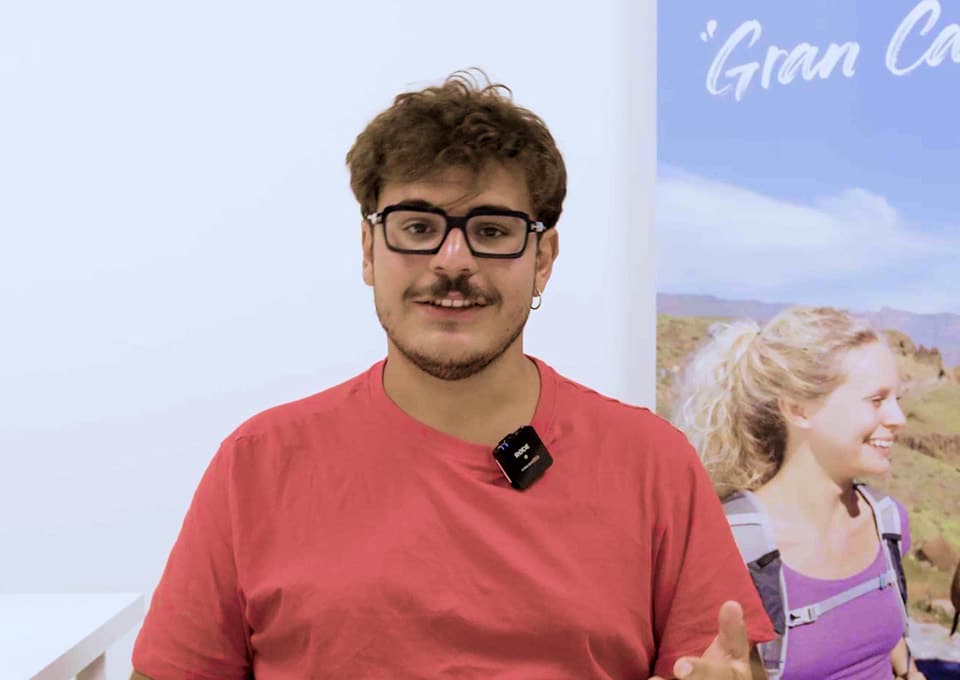
Mauro, a student at Accademia Britannica, shares his experience at the Language Campus immersion camp. Who's inside?
Meet Marta and Giorgia, students at the Accademia Britannica

Last summer they enjoyed the Language Campus immersion camp and had a fantastic time. Learn more about their experience!
Ágata tells us about her experience in Gran Canaria

Agatha is proof of our learning method. Her Spanish has improved a lot! Thank you, Agatha, we hope to see you again.
Meet Giuseppe, monitor at the Accademia Britannica in Gran Canaria

Meet Giuseppe, monitor at the Accademia Britannica in Gran Canaria